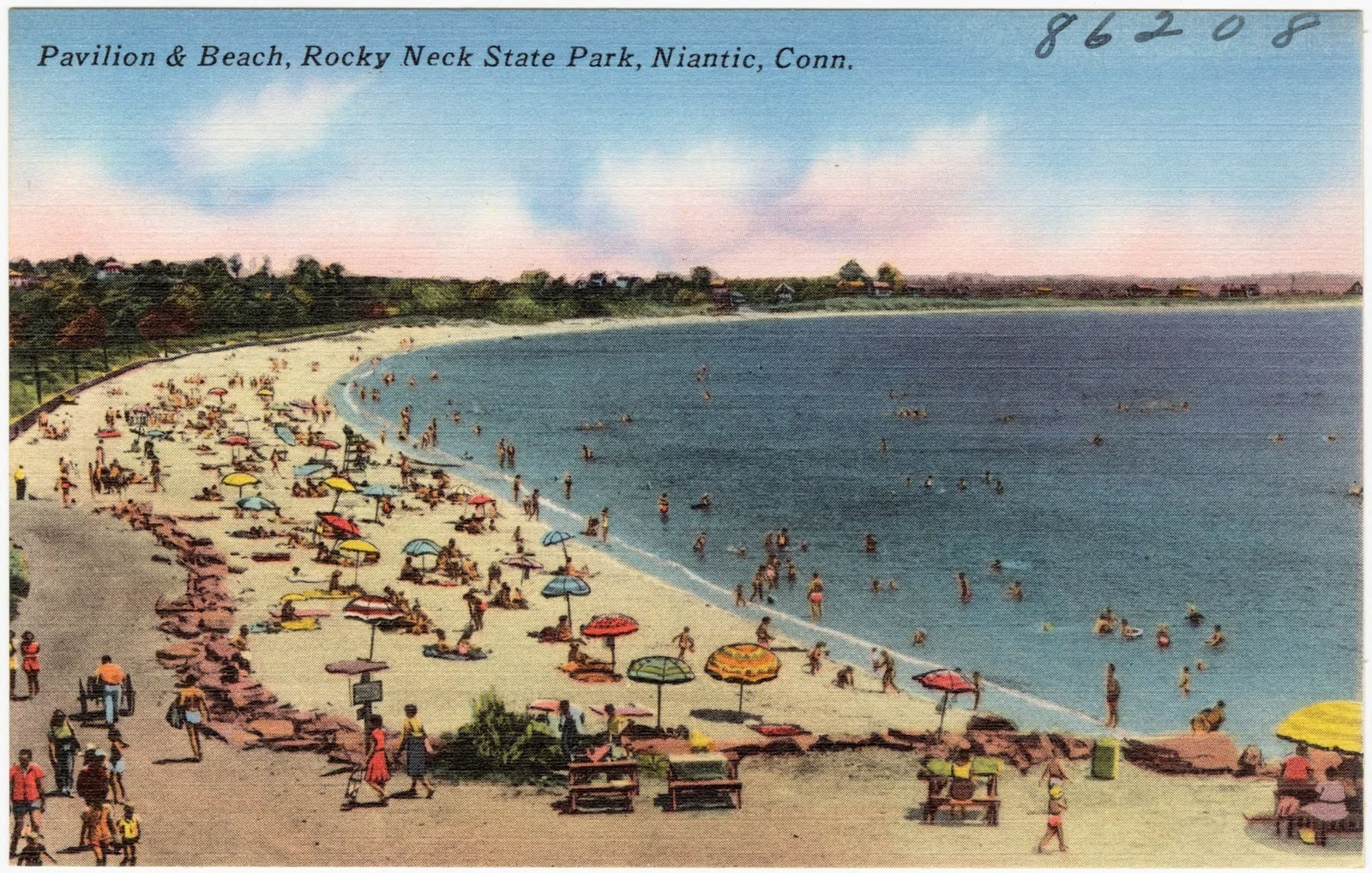
History of Rocky Neck
Rocky Neck became a Connecticut state park in 1931, after a few conservationists secured the land with their own money until the State Legislature authorized the purchase. Before that, the shore here held a fish-fertilizer factory whose smell kept developers away. Today the park is 710 acres of beach, coastal thicket, salt marsh and campground in East Lyme, run by DEEP.
History at a Glance
A Shore Known for Fish
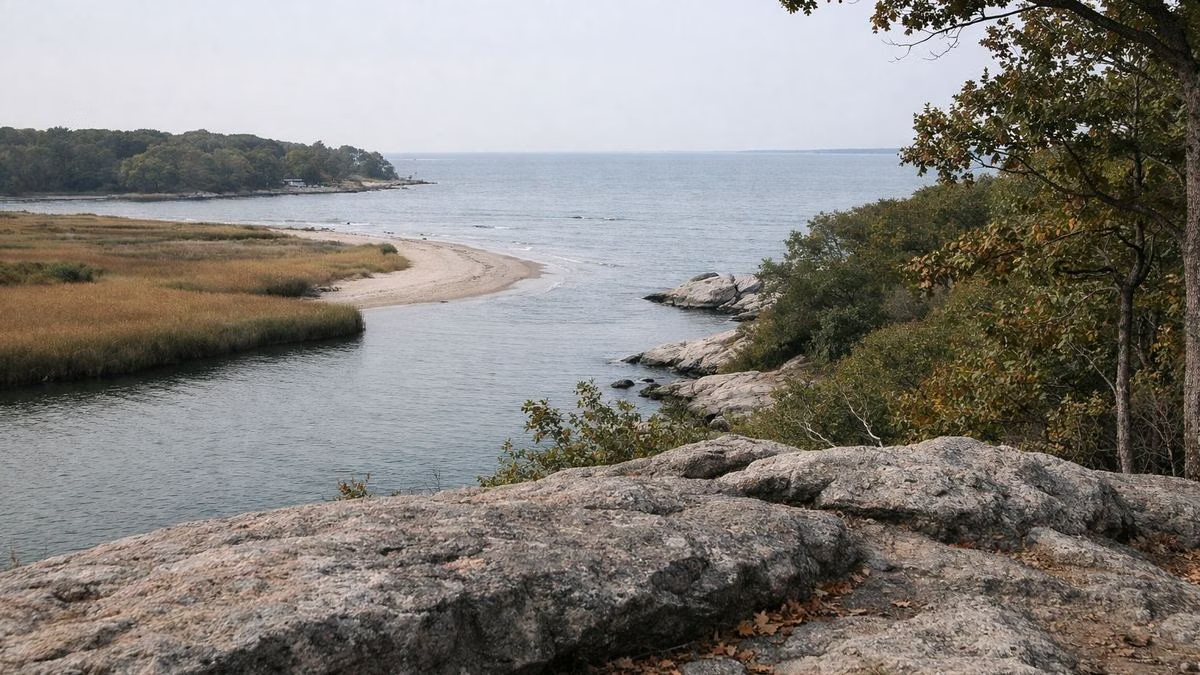
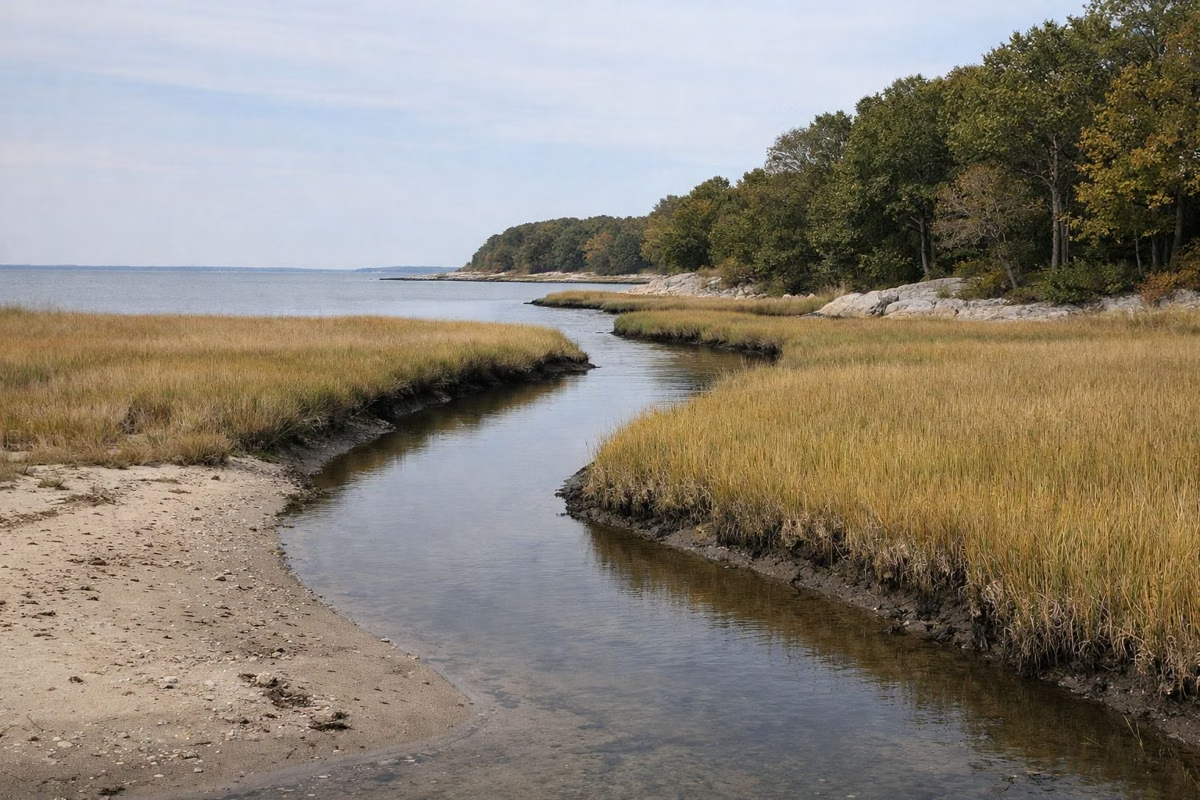
DEEP describes Rocky Neck as a place both Native people and colonists knew for abundant fish and wildlife. It is bounded on the west by a tidal river, the Four Mile River, and on the east by a broad salt marsh around Bride Brook. Each spring, high tides still carry schools of alewives into Bride Brook toward their spawning grounds. Bride Brook.
Seaweed, Then Fish, Then a Factory
Connecticut Humanities tells the next chapter. In the 1800s local farmers hauled seaweed and kelp from these waters to fertilize their cornfields. By the Civil War, small fish had replaced seaweed as the fertilizer of choice, and a factory to dry and store the fish was built on what is now park land. Fire destroyed it in the 1890s and a larger concrete plant replaced it.
When the fertilizer business ended, the factory closed. Tearing it down was a huge job and the building smelled, so developers passed the site by and the land stayed close to natural. That is when the idea of a park took hold.
The Railroad
The shoreline railroad crossed here in the middle of the 1800s; The Nature Conservancy dates the railway bridge to 1851. The line still runs along the back of the beach and is now Amtrak's, and DEEP counts train watching among the park's attractions. The bridges and embankments along Bride Brook are also part of why the marsh behind them struggles today.
Becoming a State Park
The state first considered buying the land in 1920 but did not have the money. A 1929 bill to spend $200,000 on it failed. DEEP credits a few farsighted conservationists who secured the land in 1931, floating their personal funds until the Legislature authorized the purchase, and a bill passed that year letting the state buy it and build a park.
The WPA Pavilion
Within a few years the state began its biggest project here. Construction of the pavilion started in 1934 and finished in 1937, designed by the state parks engineering department and built by the Works Progress Administration. Cobblestones came from the park's own stone walls, the tree-trunk pillars came from every state park then in the system, and the old concrete fish mill was broken up for fill and its steel beams reused. The building, now the Ellie Mitchell Pavilion, cost $240,000 and is on the National Register of Historic Places. The pavilion.
Rocks Older Than the Park's Name
The "rocky" part of the name is real at the edges. DEEP's geology notes describe Potter Hill Granite Gneiss, a well-foliated granitic gneiss from the Proterozoic, cut by pegmatite veins, with folds, potholes, glacial boulders and glacial polish along the water and on the trails. Minerals to look for include microcline feldspar, biotite, tourmaline and garnet.
Rocky Neck Today
The park now has a half-mile sand beach, a 160-site campground with three cabins, a five-mile multi-use trail network, a picnic shelter and the pavilion. Since 2024 The Nature Conservancy, with DEEP and other partners, has been planning a restoration of the 82-acre marsh along Bride Brook with a $4 million NOAA grant. Beach, camping, hiking.
History of Rocky Neck FAQ
When did Rocky Neck become a state park?
In 1931. Conservationists secured the land with their own money until the Connecticut Legislature authorized the state to buy it.
Who built the Rocky Neck pavilion?
The Works Progress Administration, a federal jobs program, built it between 1934 and 1937 to a design by the state parks engineering department.
Why is it called Rocky Neck if the beach is sandy?
DEEP does not explain the name. The beach is stone-free sand, but the headlands, ledges and jetty around it are granite gneiss, boulders and rock, which draw climbers and anglers.
How big is Rocky Neck State Park?
710 acres, according to DEEP.